

ContentsTap to jump to a section+
- A B2B website must answer the problem, solution, risk, proof and next-step questions asked by several decision makers.
- Each landing page should own a clear search intent and connect useful content with relevant case studies and guides.
- Technical SEO creates the foundation; messaging, proof, appropriate calls to action and end-to-end measurement create leads.
How is an SEO-ready B2B website different from an online brochure?
An SEO-ready B2B website serves two journeys at once: search engines need to understand the problems the company solves, while buyers need to evaluate capability, fit and risk before making contact. A homepage that only describes the company is not enough; the site must take readers from a problem to a solution, evidence and a sensible next step.
B2B decisions commonly involve several roles. Users care about workflow, managers care about outcomes, technical teams care about integration and budget owners care about cost and risk. Strong content lets each role find answers without turning every page into a long, generic company profile.
- State the audience, problem and outcome the business can support.
- Provide specifications, process, deliverables and limits where relevant.
- Use verified case studies, projects, certifications or methods as proof.
- Offer a next step that matches the buyer's level of readiness.
A strong B2B website does not try to close a contract in one visit. It gives the right people enough evidence to move the conversation forward.
Content architecture that buyers and Google can understand
A practical foundation includes services, industries or use cases, projects, resources and contact. Each important service deserves a landing page with one primary search intent, but the page must explain the problem, approach, deliverables, process, cost factors and real buyer questions rather than merely repeat keywords.
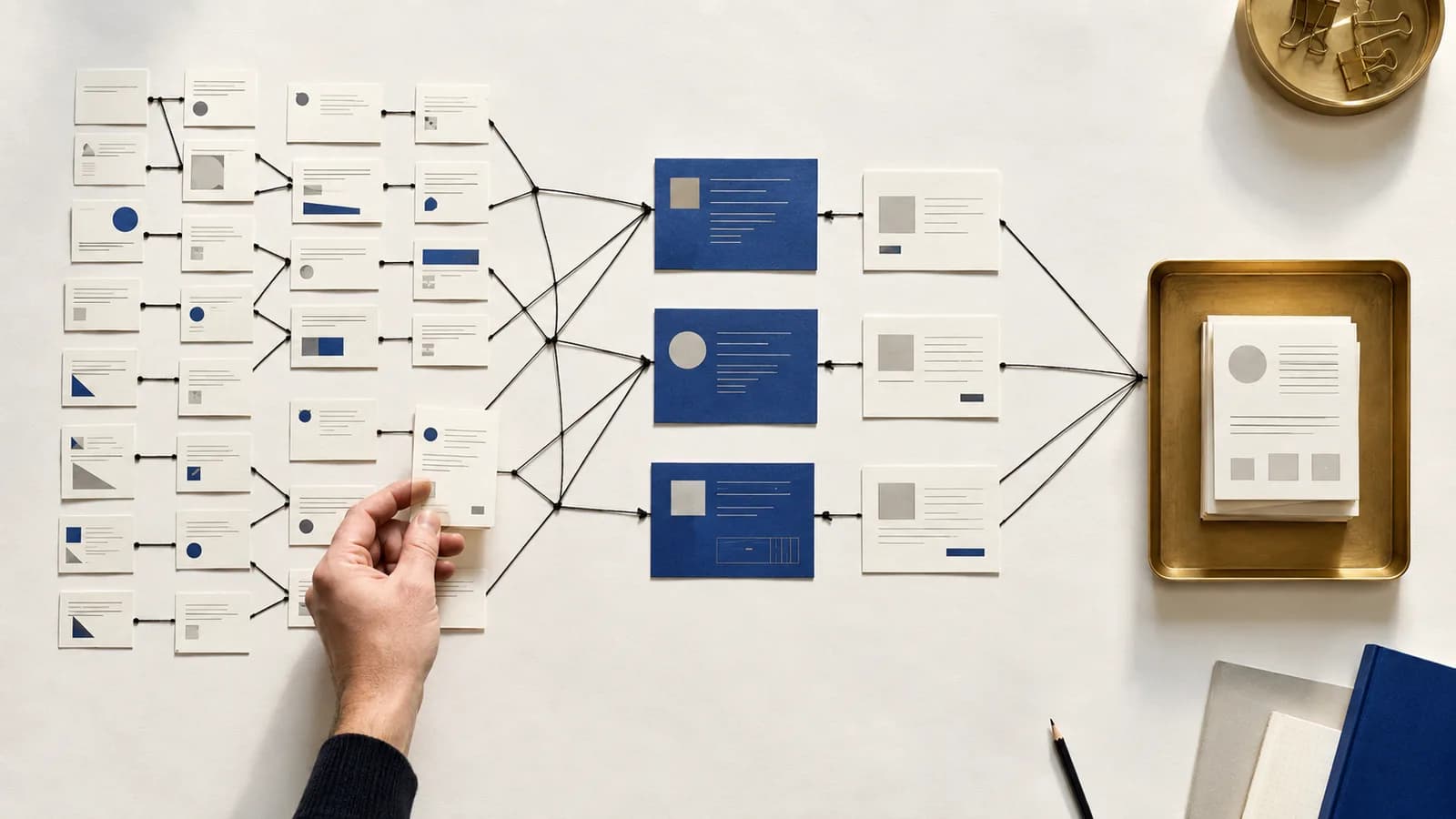
Google recommends organising a site logically, using descriptive URLs and connecting related resources. Friday Works uses a path from homepage to service hub, from landing page to case study and guide, and from the guide back to the service. Descriptive anchor text helps readers and search engines understand each destination.
- Service pages own commercial intent and explain delivery.
- Use-case or industry pages explain a specific operating context.
- Case studies demonstrate capability with approved evidence.
- Guides answer questions before a buyer is ready to talk.
The technical SEO foundation to complete before publishing
Primary content should be present in crawlable HTML rather than hidden in a modal or loaded only after an interaction. Each URL needs a unique title and description, a self-referencing canonical, clear headings, a sitemap containing indexable URLs and schema that matches visible content. Multilingual pages also need separate URLs and reciprocal hreflang annotations.
Mobile experience and performance are product requirements. Images need appropriate sizing, video should not block the main content, fonts and scripts require control, and forms need labels and keyboard access. Search Console confirms how Google sees the page, while Core Web Vitals and analytics expose friction after launch.
- Crawlable HTML, stable URLs, canonical, sitemap and robots consistency.
- Unique metadata, visible content and valid structured data.
- Responsive content design rather than a shrunken desktop layout.
- Measurement for LCP, INP, CLS, form errors and conversions.
Design calls to action and measure leads by readiness
Not every visitor is ready to request a proposal. A service page can invite a project discussion, while a guide may offer a checklist, case study or assessment request. A call to action should state what the person receives, how long it takes and which information is required. The first form should ask only enough to route the conversation.
Measurement should connect acquisition to an action and lead status. At minimum, track form submissions, email, Zalo, phone and service CTA clicks, then connect them to the CRM or sales process to identify qualified leads. More traffic without relevant conversations is not the final outcome of a B2B website.
- A primary CTA for active demand and a secondary path for research.
- A clear confirmation, response time and owner for each enquiry.
- Consistent analytics event names with internal tests excluded.
- Reporting by landing page, source, lead quality and business outcome.
Friday Works' B2B website delivery checklist
Friday Works starts with the business goal, buying group, intent-led keywords and existing content. The team then plans the sitemap, message, wireframes and calls to action before final visual design. A focused corporate site is commonly planned over 4–6 weeks; a multilingual or deeper B2B catalogue commonly takes 6–10 weeks when data and reviews are ready.
Before launch, the project is checked for content, devices, accessibility, metadata, canonical, hreflang, schema, sitemap, analytics and form journeys. These are planning ranges, not universal commitments. The confirmed schedule depends on templates, data quality, integrations and editorial responsibilities.
- Confirm goals, buyers, keywords and the definition of a qualified lead.
- Design architecture, content and actions before decoration.
- Build responsive UI, technical SEO, tracking and editorial control.
- Complete QA, connect Search Console and establish a data baseline.
FAQ
Frequently asked questions
Which pages does an SEO-ready B2B website need?
A useful minimum includes distinct service pages, industries or use cases when genuinely different, case studies, capability information, guides that answer buyer questions and contact. The exact structure should follow the buying journey and the content the organisation can maintain.
How is B2B SEO different from retail SEO?
B2B SEO commonly supports longer decisions, several roles and greater evidence needs. Content should therefore connect search demand with solution scope, proof, risk, process and an appropriate contact step.
Does every service need its own landing page?
Yes when it has a distinct search intent, scope and value. Avoid producing many near-duplicate pages for keyword variations; every page should answer a genuinely different need.
Does an SEO-ready website guarantee first place on Google?
No. A sound foundation helps Google crawl and understand content, but ranking also depends on content quality, competition, brand signals, links and time. Google does not guarantee indexing or first place.
How does Friday Works measure a B2B website?
We track indexability, impressions, click-through rate, landing pages, form submissions, contact clicks and lead quality. A useful baseline is established after enough data exists rather than promising rankings before launch.
References
Sources used in this guide
We prioritise official guidance and primary technical sources. Visit each source for full context and the latest updates.