

ContentsTap to jump to a section+
- Google marks the feature generally available, with rollout starting October 16 and expected to finish over several days.
- New apps default to Markdown; existing apps retain Chat syntax for compatibility.
- Incoming webhooks default to Chat syntax; do not bulk-convert templates based only on the announcement date.
A new default for app-generated messages
Google Workspace announced on October 16, 2026 that Chat API applications can select standard Markdown or original Chat syntax as their app-level default. The generally available feature began rolling out that day, with completion expected over the following days.
Workflow teams should review order, incident and approval-notification templates before changing configuration. Formatting affects readability, not the authorization rules for the underlying business action.
The sending route determines the default
Google documents Markdown defaults for new apps and unconfigured Cloud-project calls, while existing configured apps retain Chat syntax for compatibility. Incoming webhooks default to Chat syntax. The announcement does not imply that every bot changes rendering immediately.
Individual requests can override the app default using markupSyntax on Message. Friday Works recommends identifying whether each sender is a configured app, an unconfigured call or a webhook before altering shared templates.
Test links and user-provided text
Google’s formatting guide distinguishes Markdown links from Chat-style links. A message accepted by the API can still be confusing if its formatting obscures the record a recipient must open.
Friday Works suggests testing a heading, short list, destination link and user-provided field in a company-controlled space. Avoid exposing sensitive records in public tests. This recommendation is not a report of a Google incident.
Consider older templates before changing the app
A bot can send several notification types. Testing one new template after an app-wide change may miss older reports and reminders. Inventory the expected syntax for each template and plan any gradual conversion.
Preserve the prior configuration and a rollback option. Where using per-request overrides, make the choice explicit in the sending workflow. A formatting test does not require granting the bot broader business-data permissions.
Verify the recipient’s outcome
Confirm delivery, rendered text, correct destination and a clear next action. Keep authentication and authorization at the destination system for sensitive actions such as expenditure approval.
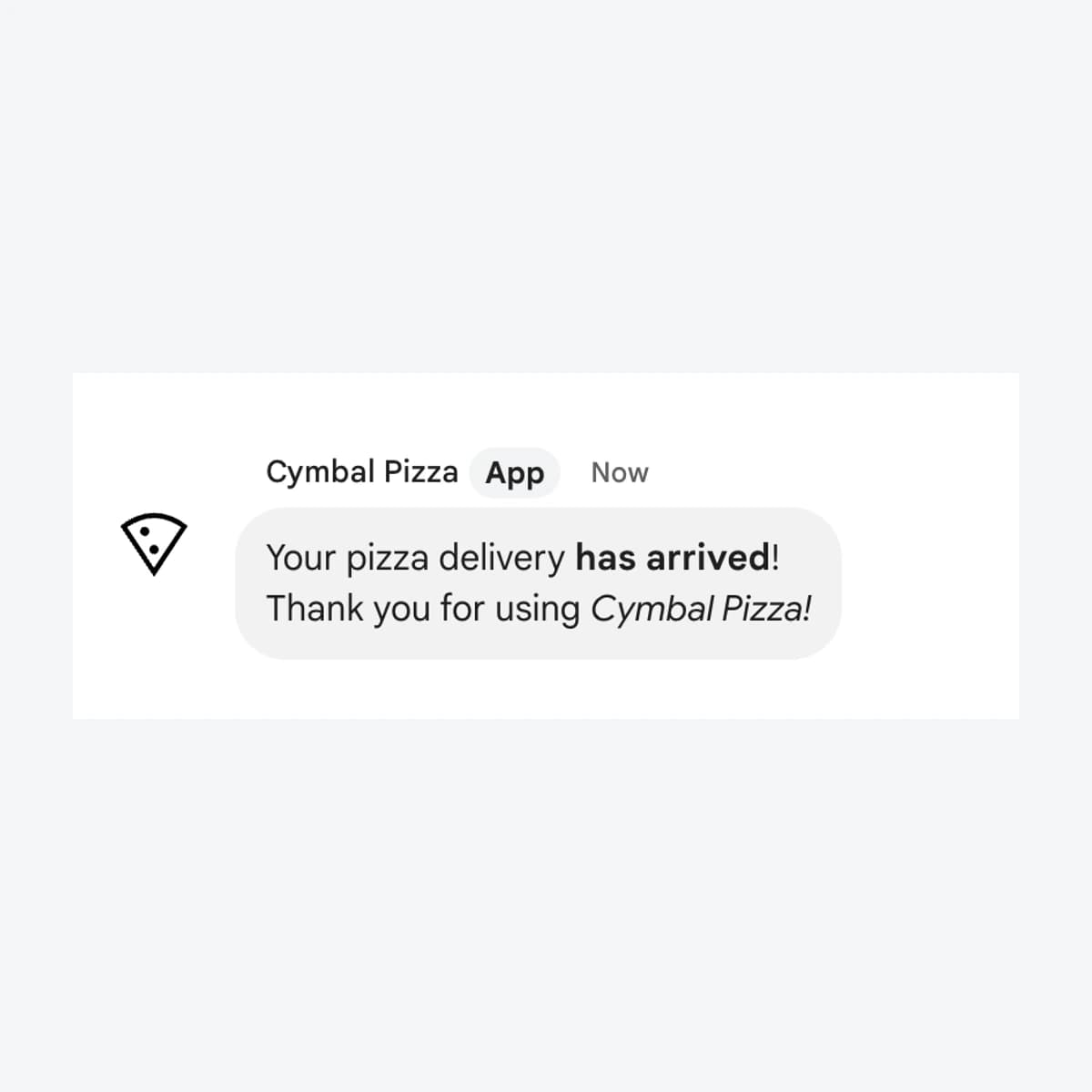
This October 18 report covers the October 16 rollout without claiming universal completion. The visual is Google’s documented Chat interface example, not a fabricated customer bot or evidence of a Friday Works deployment.
References
Sources used in this guide
We prioritise official guidance and primary technical sources. Visit each source for full context and the latest updates.
- Workspace developer release notes — 16 October 2026Google ↗︎
- Format messages — default syntax, overrides and webhook distinctionsGoogle ↗︎
- Message resource — markupSyntaxGoogle ↗︎
- Google Developers; resized proportionally, centered with neutral margins; no crop or invented interfaceGoogle Developers ↗︎
- Google Developers documentation imagery: CC BY 4.0 unless otherwise noted; proportional resize, no content alterationGoogle Developers ↗︎