

ContentsTap to jump to a section+
- A repeated event is not a new payment.
- Verify a notification before changing an order.
- Reconcile payments and accounting records during acceptance.
One payment can produce repeated delivery
A provider may retry a payment notification after a network or receiver failure. A receive-and-create implementation can therefore duplicate business records.
A webhook is a server notification sent to a registered endpoint. Stripe is a documented example; other providers have their own contracts.
Separate delivery from business completion
Friday Works recommends recording event and transaction identifiers, receipt time and processing outcome. Distinguish received, processing, completed and review-required states.
Deduplicate by the business operation as well as the notification. Multiple event types can legitimately refer to one payment. Define eligible states, refunds and retry ownership.
Verify before updating orders
Stripe documents signature verification, duplicate deliveries and event-order considerations. Apply the actual provider’s verification mechanism before changing payment status.
Keep verification secrets server-side and separate test and production. Reject invalid notifications without logging unnecessary sensitive data.
Test controlled failures
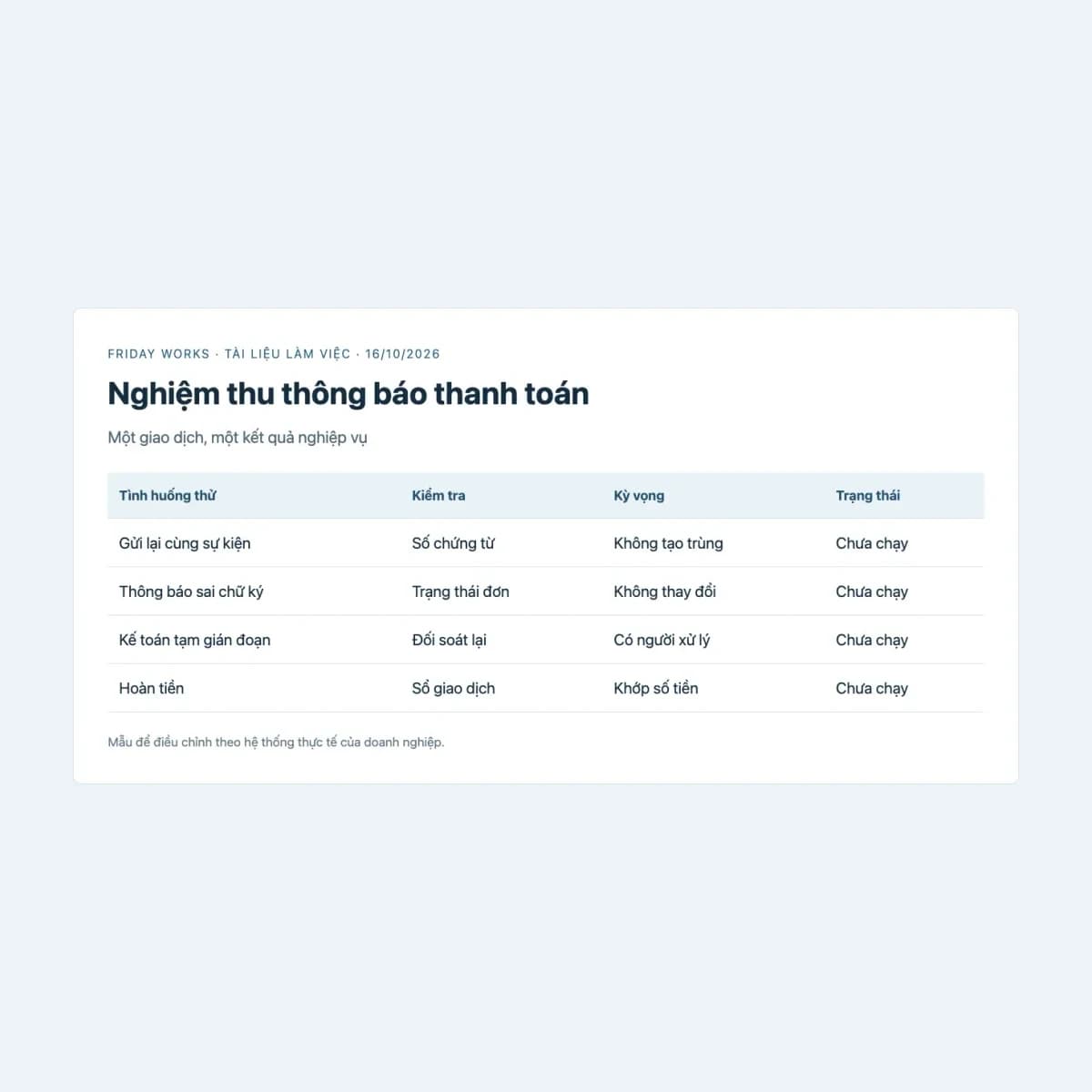
In the approved test environment, replay an event, change delivery order and interrupt the accounting response. Inspect resulting orders and records.
If a record was created before completion tracking failed, a retry must reconcile that result before creating another. Use provider idempotency mechanisms within their documented limits.
Reconcile missing work too
Deduplication alone cannot detect every missing transaction. Compare provider payments, orders and accounting records periodically, with amounts, waiting time and an accountable owner.
Document safe retries and exceptions. For MISA or another ERP, validate its actual API and service-account permissions rather than assuming a built-in deduplication feature.
References
Sources used in this guide
We prioritise official guidance and primary technical sources. Visit each source for full context and the latest updates.