

ContentsTap to jump to a section+
- Choose pages around buyer questions, not a package's page count.
- Service and project pages should explain specific work, not just display attractive images.
- Agree on content, ownership and the inquiry path before designing layouts.
Start with buyer questions, not a page count
A manufacturer and a consultancy may both need new websites, but their buyers need different evidence. One asks about materials, tolerances and capacity; the other asks about the delivery process and the responsible team.
Define who visits, what they need to know and what they should do next before choosing layouts. The following nine page types are options, not mandatory pages for every business. Ten repetitive pages are less useful than a smaller site that answers real purchasing questions.
A professional website makes it clear what you do, whether you fit the project and how to contact you.
1. Homepage: say what you do and for whom
Use a specific service statement. 'Custom metal parts from engineering drawings' is clearer than a generic promise of success. Add geography, capabilities or boundaries where they help buyers judge fit.
Guide visitors to services, products, projects and inquiries. Use relevant evidence with permission, such as real product photographs or a documented delivery process. The homepage should not reproduce the entire company brochure.
2–3. Service and product pages
Give distinct, important services their own pages. Explain the problem, scope, process, deliverables, exclusions and next step. Someone researching website design should not have to work through a general software-company introduction.
For products, prioritise specifications, materials, applications, options and downloadable documents. Request-a-quote workflows may be more appropriate than online checkout when an engineer must confirm the specification.
Google's people-first guidance supports useful, original information. In practice, write what buyers need to know about your actual offer, rather than duplicating paragraphs and swapping industry names.
- Services: audience, scope, delivery, outputs and an inquiry route.
- Products: licensed images, specifications, options and supporting documents.
- Use distinct page titles, stable URLs and discoverable navigation links.
4–5. Projects and company information
Describe the need, your actual role and outcomes you can substantiate. If client names are confidential, share only an approved description. Do not invent revenue uplifts or imply generated pictures are client evidence.
The company page should explain responsibility and capability. Use genuine workplace or product photography when available. State certification scope and validity accurately.
A hypothetical project description such as 'reorganised 80 product records and added product-specific quote forms' explains the work without making an unsupported business-impact claim.
6–7. Pricing and frequently asked questions
Custom services do not always have a fixed price. Explain the cost drivers, baseline scope, separately priced work and information needed for a quote. A starting price needs its conditions and update date.
Use real buyer questions: content writing, domain ownership, migration, support and handover. An FAQ should reduce uncertainty, not repeat keywords.
8–9. Contact and useful resources
Explain the contact options and what happens after submission. Ask only for information needed for the initial discussion. Preserve entered information when validation fails and make errors understandable.
W3C recommends short forms with clear labels, instructions and result notifications. This helps people using assistive technology as well as buyers completing an inquiry on a phone.
Publish resources about product selection, preparing specifications and planning projects. Connect them to the relevant service with descriptive links. Unrelated traffic is not a substitute for qualified inquiries.
Agree on the structure before design
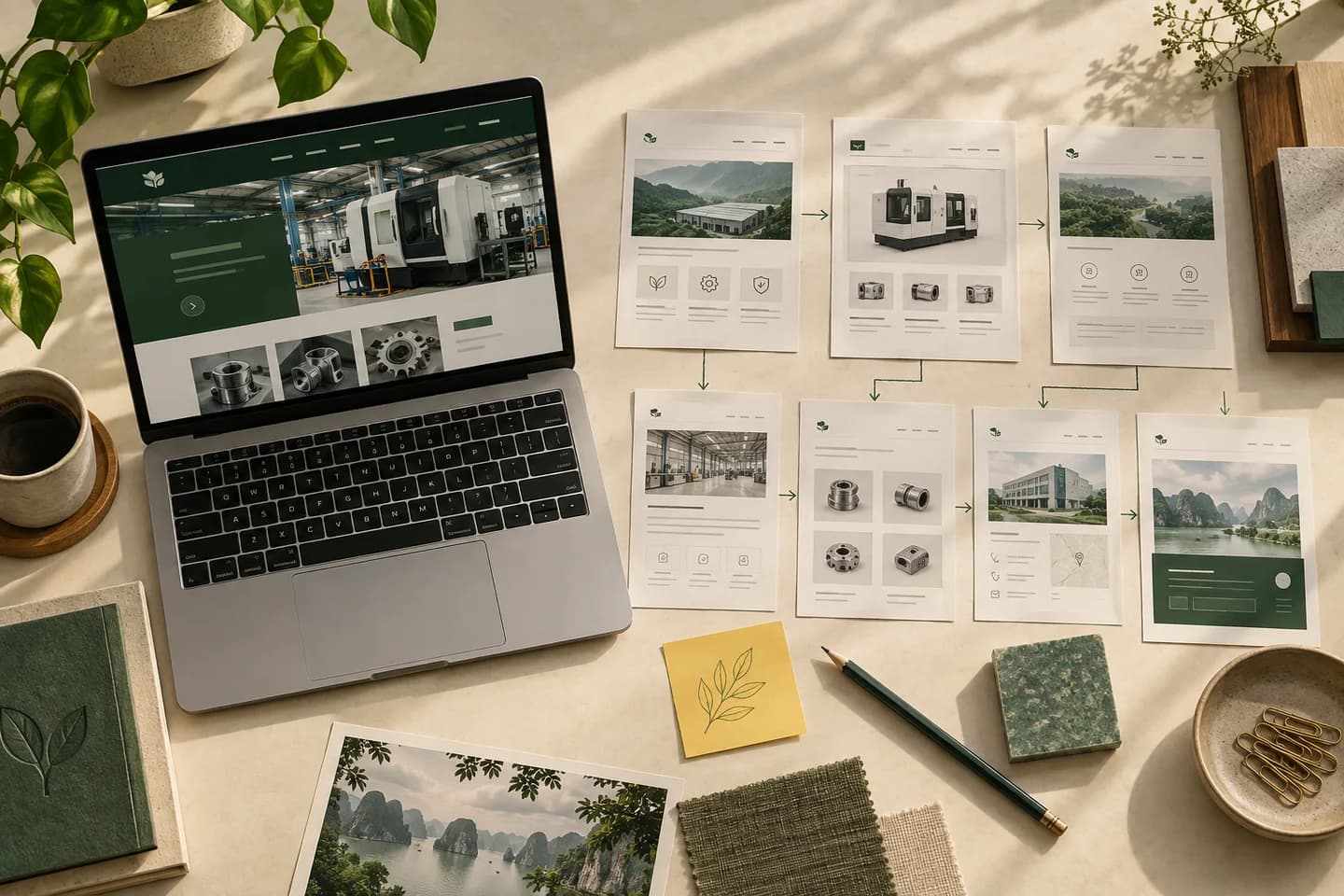
Create a simple table with page name, buyer question, available evidence, reviewer and next step. A service page may lead through a project to a quote form; a product page may lead through technical documentation to advice.
Agree on who updates the site after launch and check existing traffic-bearing URLs before removing pages. Otherwise current information can drift or valuable entry points can disappear.
Friday Works designs business websites against an agreed scope. Share the current website, service list and recurring customer questions to discuss the appropriate structure.
- Choose the main audience and goal.
- Avoid pages competing to answer the same question.
- Assign content and approval responsibilities.
- Check the inquiry route on mobile.
- Agree on ownership, handover and measurement.
FAQ
Frequently asked questions
Does every business need all nine page types?
No. They are planning options. A simple service business can combine some content, while a large product catalogue needs more structure. Choose around buyer questions and content-maintenance capacity.
What can a new business publish without client case studies?
Share approved process documentation, sample products and capability evidence. Label demonstrations accurately and never present hypothetical work as completed client projects.
Must a business website display fixed prices?
No. Custom services can explain cost drivers, reference scope and quote requirements. Any starting price should state its conditions.
References
Sources used in this guide
We prioritise official guidance and primary technical sources. Visit each source for full context and the latest updates.