

ContentsTap to jump to a section+
- The 28 October release changes session management
- AHP handles session state rather than every AI connection
- Local, cloud and remote execution have different conditions
The 28 October release changes session management
Microsoft released VS Code 1.144 on 28 October 2026 and introduced Agent Host Protocol 1.0, or AHP. The change separates the agent execution host from one interface window, allowing clients to share a synchronized view of sessions.
Teams using multiple machines, remote environments or long-running work should first establish where execution happens, who can connect and what survives a closed window. An independent session does not mean local work continues after the computer shuts down. This 30 October analysis uses release and protocol documentation; images are official 28 October demos with sample projects, not a Friday Works customer deployment.
AHP handles session state rather than every AI connection
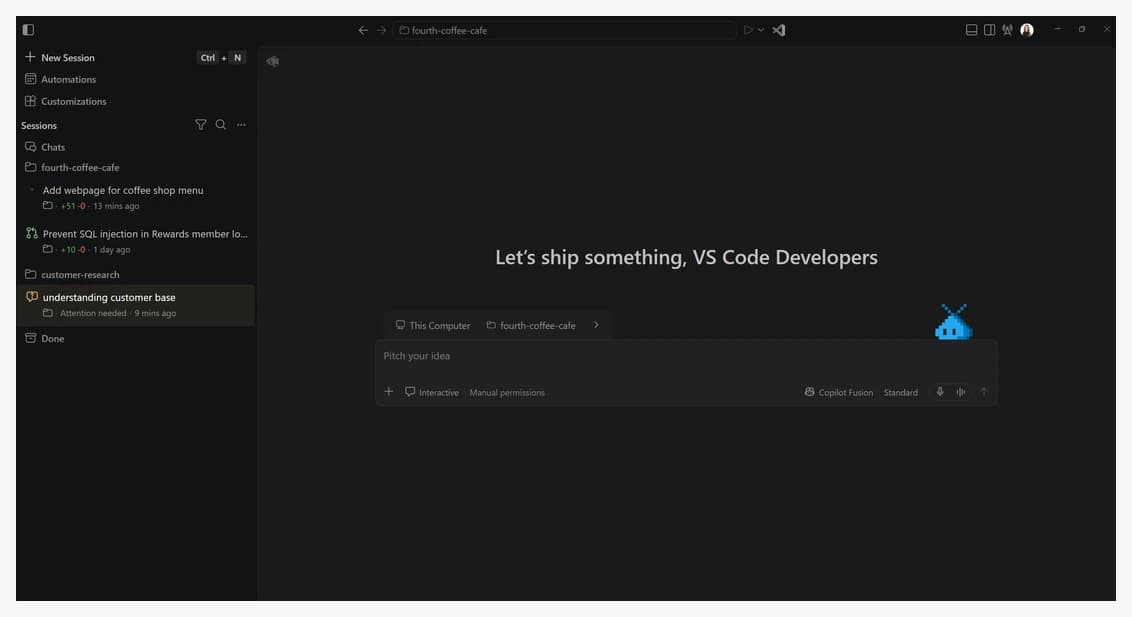
AHP defines communication between a standalone session server and its clients. The host maintains authoritative state; subscribed clients receive a snapshot and subsequent actions so they converge on the same session instead of maintaining unrelated histories.
Channels identify resources such as chats, terminals and code changes, allowing clients to load relevant state on demand. This synchronizes interfaces; it does not certify an agent's work. MCP connects tools and resources, while AHP addresses client-to-session-host communication. Supporting the protocol does not give every agent identical capabilities, tools or permissions.
Local, cloud and remote execution have different conditions
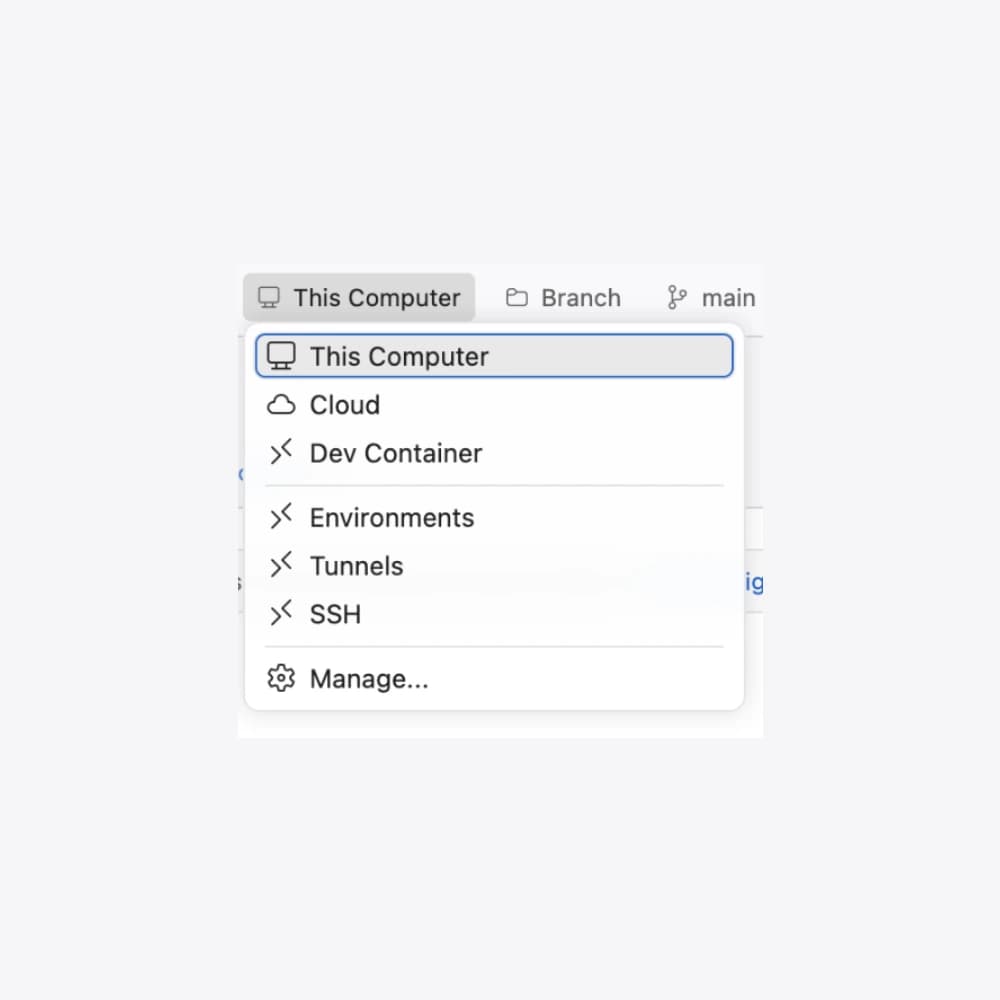
The official host selector shows This Computer, Cloud, Dev Container and other environment connections. The host owns execution; the user interface is an access point. Record that distinction for long-running tasks.
Closing a client differs from terminating the host process. A local host cannot be assumed to continue after its computer shuts down. Remote and cloud persistence depends on environment lifetime and provider conditions. Reopening a client elsewhere does not automatically transfer repository access, secrets or tools. Check the actual execution context before resuming work.
Shared sessions make access controls more important
AHP documents authentication discovery and delivery of tokens for resources required by an agent. Tokens grant access and should not appear in public screenshots, logs or arbitrary model context. Matching resource requirements to granted authority remains an implementation responsibility.
Seeing a synchronized session does not authorize every repository, action or approval. Define who can create, inspect, resume and authorize work. Friday Works recommends isolated evaluation, least-privilege accounts and avoiding publicly exposed host endpoints merely for convenience. Test denied access as well as successful connections.
A test more useful than counting agents
A useful pilot could start one harmless task on a sample repository, then reconnect from another client. Check that history, file changes and approval state remain consistent and that reconnecting does not duplicate consequential operations.
Compare closing only the client with stopping the host. These are proposed tests, not results claimed in this article. AHP 1.0 offers an integration layer between interfaces and agent hosts, but business value depends on controlled continuation, trustworthy state and clear authority, rather than the number of visible windows or agents.
Further implementation reading
Friday Works provides implementation information and evaluation steps for business systems.
References
Sources used in this guide
We prioritise official guidance and primary technical sources. Visit each source for full context and the latest updates.
- VS Code 1.144 stable release, 28 October 2026Microsoft ↗︎
- VS Code release overview and exact Agents window/host demo, 28 October 2026Microsoft / Hailey Victory ↗︎
- AHP 1.0: client/server state and channelsMicrosoft ↗︎
- AHP authentication: per-agent resource requirements and token handlingMicrosoft ↗︎
- Images: AgentsWindow.png and multi host.png in the 28 October blog directory; Microsoft official sample projects, not Friday Works results; resized with neutral margins, host menu crop for coverMicrosoft / VS Code Team ↗︎
- Documentation and screenshots: CC BY 3.0 US; trademark rights excluded, no endorsementMicrosoft ↗︎
- Attribution licence 3.0 United StatesCreative Commons ↗︎