

ContentsTap to jump to a section+
- Interactive apps can move directly from Gemini to the Sites editor.
- Export creates a private draft rather than automatically publishing to the web.
- Export alone does not establish SEO, data security or business-process correctness.
From a Gemini app to an editable website draft
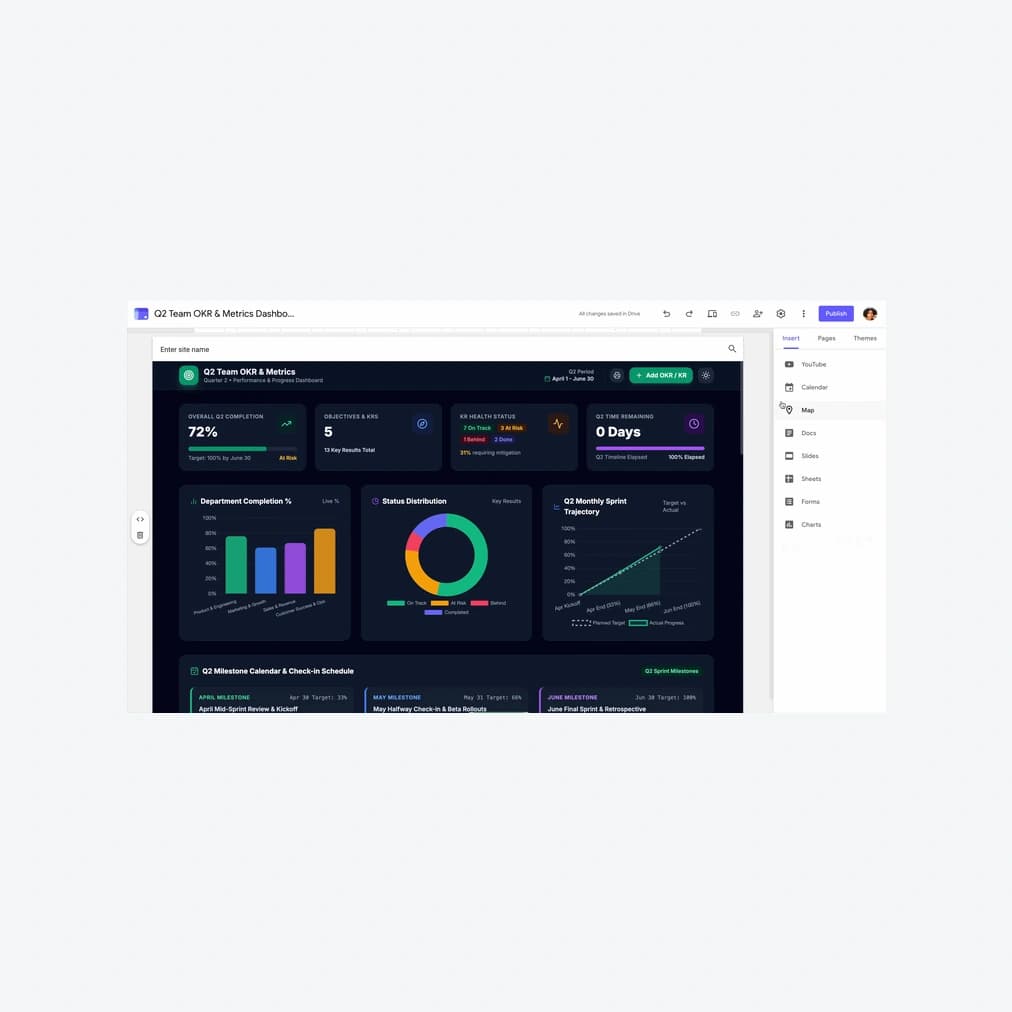
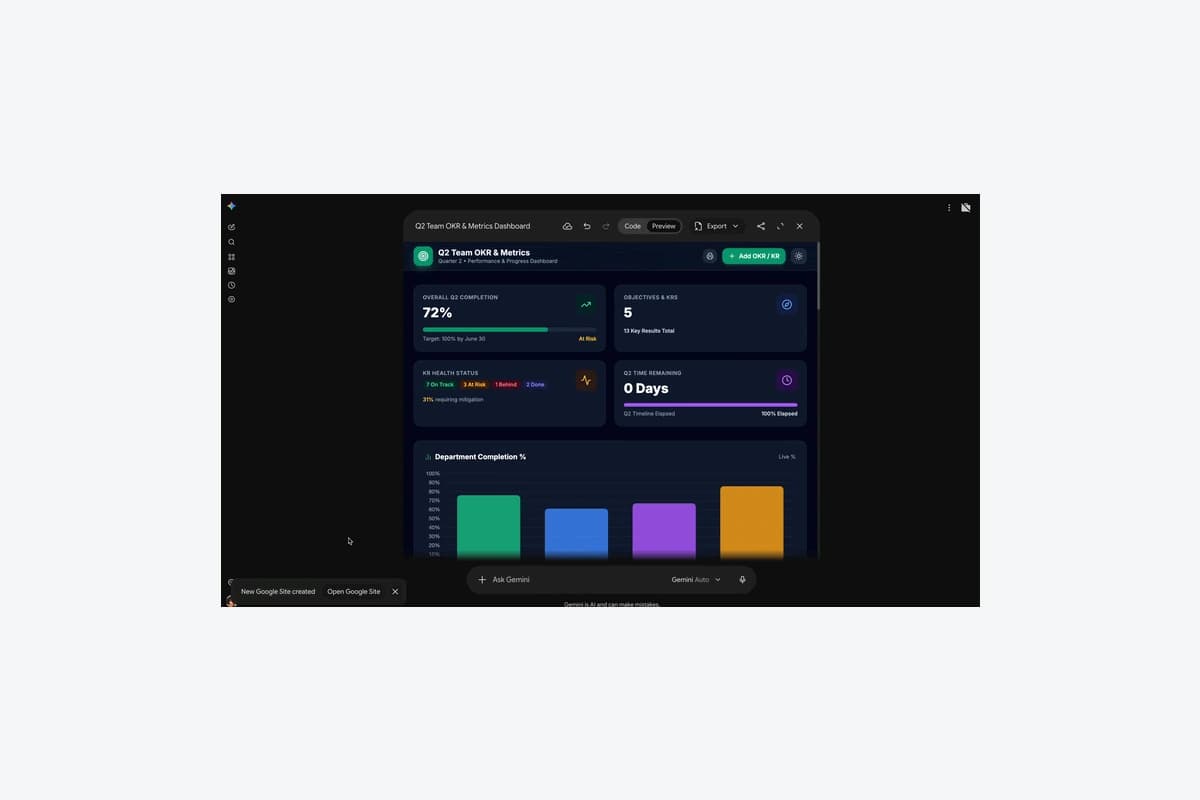
Google announced direct export of Gemini-created interactive apps to Google Sites on October 19, 2026. Export > Google Sites creates a new private, editable site draft. Content teams gain a shorter route to a web experience, while audience and content review remain necessary before publishing.
The notice says the feature is available on web, Android and iOS to users with Gemini access, including relevant Workspace, Individual and personal accounts. Sites creation/editing must be enabled, and existing Sites and Drive policies still apply.
A private draft is distinct from a published site
Users can edit the draft and then deliberately publish and share it. Successful export does not mean an external website is already accessible. Keep draft-editing permissions separate from published-viewer permissions instead of sending customers an editor link.
Friday Works sees a possible use in a small campaign’s preliminary calculator or data explainer. Validate calculations, empty inputs and limitations before using it operationally. That is an illustrative scenario, not an approved financial tool or tested customer product.
Google’s Q4 Metrics demo shows the actual Gemini app and Sites editor. Its percentages and charts are sample data. The article uses those real screens to explain the transition.
Review content and behaviour before opening access
Friday Works recommends reviewing labels, errors, calculations and claims after export. Correct titles do not validate generated logic. Prices, service conditions and period-specific data need an accountable reviewer before publication.
Sites provides device-layout previews. Test narrow screens, enlarged text, keyboard use, controls and destination links. An attractive editor preview does not establish that mobile visitors can read or operate the app.
If the app collects user information, review its data flow and permissions separately. Export is not evidence of a secure database or integration. Use sample data until the actual implementation is understood.
Fast export does not establish search visibility or confidentiality
Sites supports Restricted or Public viewing and organization-specific options. For internal content, Friday Works recommends controlled authorized and unauthorized viewing checks. A search-engine exclusion request is not an access-control mechanism.
Google explicitly warns that the request to keep a public site out of search is not guaranteed. Equally, exporting an app to Sites does not guarantee indexing or rankings. Useful content, clear titles and appropriate linking still require editorial work.
The October 19 change shortens the route to a Sites draft. Validate correctness, audience and the actual experience before customer use. No ranking, absolute-security or business-outcome claims are inferred from the vendor demo.
References
Sources used in this guide
We prioritise official guidance and primary technical sources. Visit each source for full context and the latest updates.
- Official announcement —19 October2026; see article for separate rollout datesGoogle Workspace ↗︎
- Publish and share a site — preview, published viewers and search-engine request limitationGoogle Sites Help ↗︎
- Official product demonstration, published 19 October 2026; © Google, sample data. Selected static frame/crop, proportional resize and neutral framing; not customer results.Google Workspace ↗︎
- Google product screenshot guidance: explanatory/educational use; copyrighted UI, not a Creative Commons photograph. No affiliation or endorsement.Google ↗︎