

ContentsTap to jump to a section+
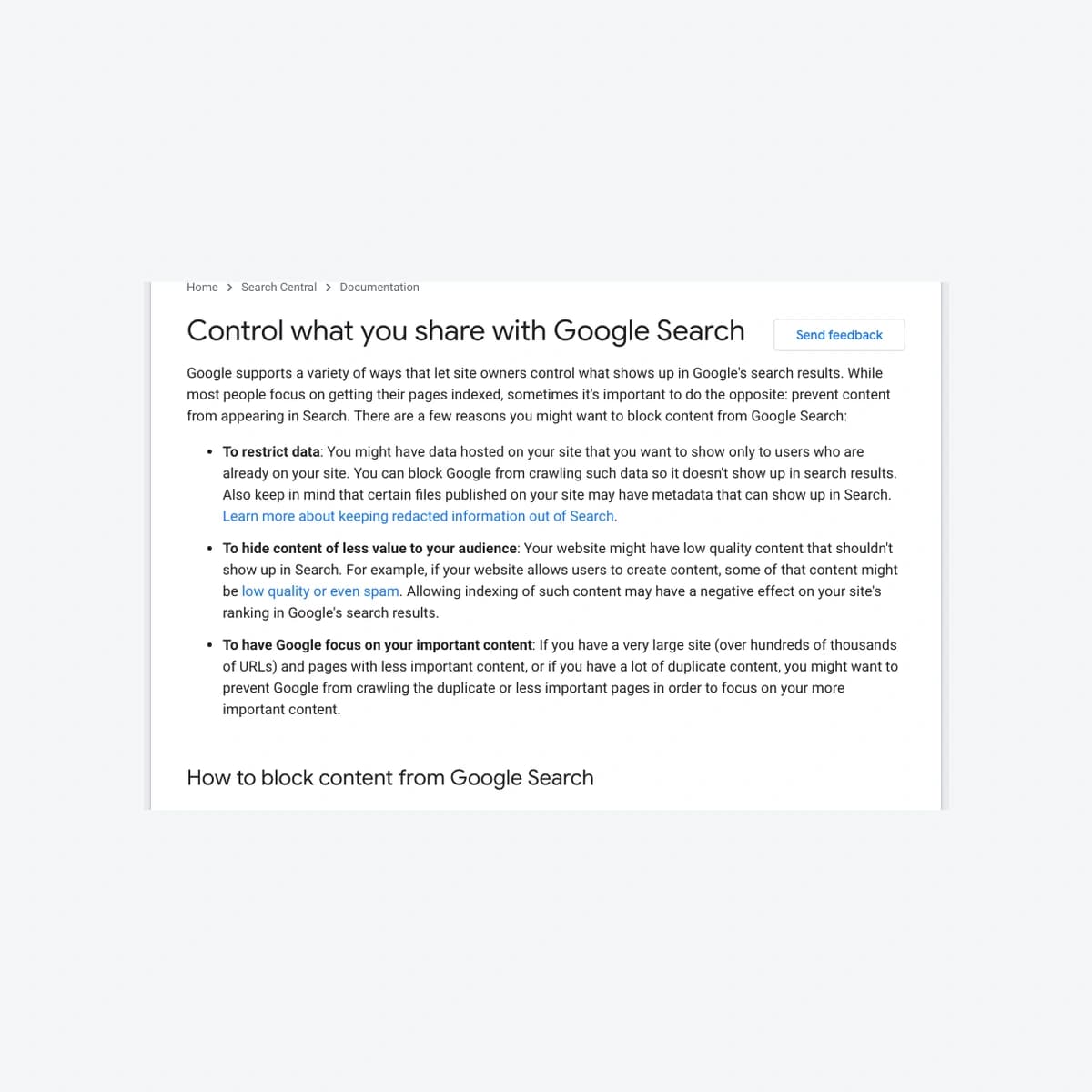
- Google updated Control what you share with Google Search on October 21, 2026, adding references to existing robots meta, data-nosnippet, X-Robots-Tag and Search generative AI controls. Website teams should first distinguish excluding a page, limiting a snippet and protecting private data.
- Google continues to identify password protection as an option for private material. A customer quote, contract or export can remain directly accessible to someone with the URL even when marked noindex. Indexing directives do not implement application authentication.
An explicitly dated documentation update
Google updated Control what you share with Google Search on October 21, 2026, adding references to existing robots meta, data-nosnippet, X-Robots-Tag and Search generative AI controls. Website teams should first distinguish excluding a page, limiting a snippet and protecting private data.
This report is published October 23 and explicitly identifies October 21 as the event and source date. The expanded selection window is disclosed. The change clarifies existing controls; it does not announce a new ranking algorithm or imply that all listed mechanisms are new.
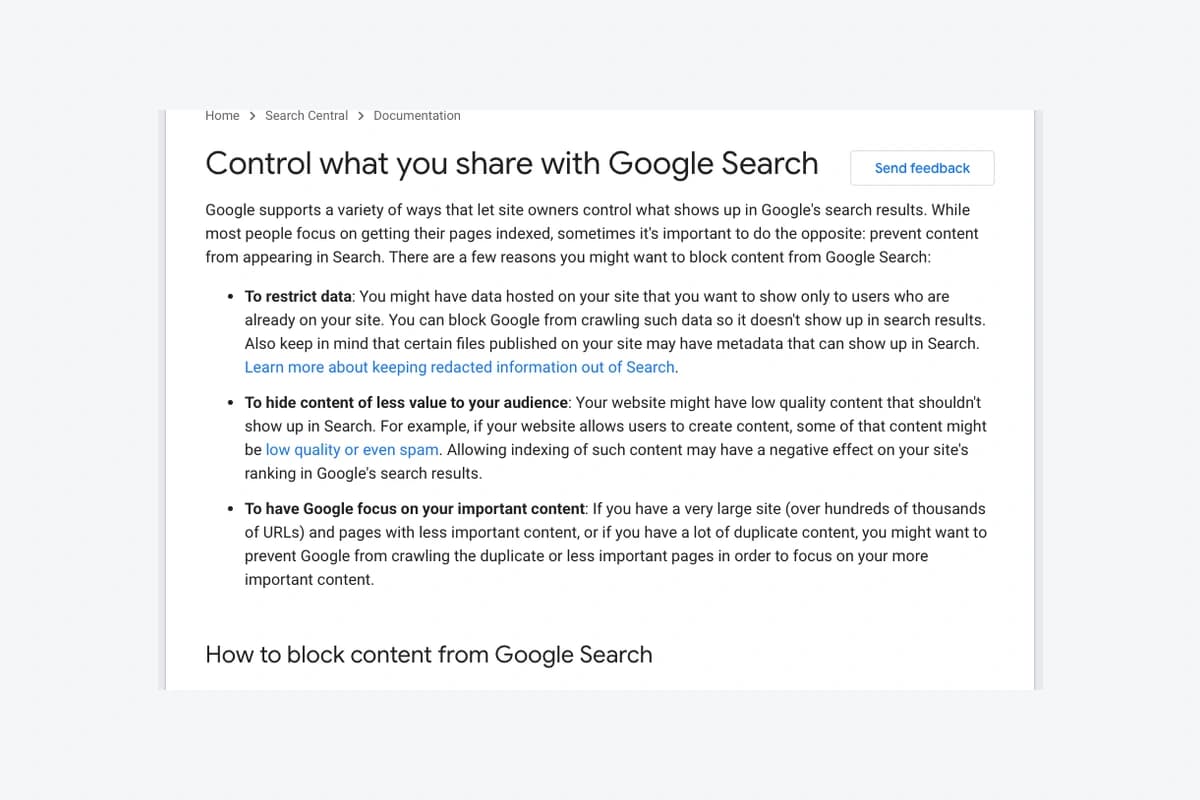
The original capture shows the actual Search Central document that changed. It is documentation, not a homemade worksheet and not a screenshot of the Search Console application.
Private information requires access control
Google continues to identify password protection as an option for private material. A customer quote, contract or export can remain directly accessible to someone with the URL even when marked noindex. Indexing directives do not implement application authentication.
Friday Works recommends checking server-enforced access across all owned download paths. A protected HTML page with an unrestricted PDF URL leaves part of the workflow public. This is an example for reviewing an organization’s own configuration, not a method for locating someone else’s data.
If sensitive material was exposed, address source access and copies first, then use the appropriate search-removal process. Disappearance from a search result does not establish that every Internet copy is gone.
Page-level and passage-level decisions differ
Robots meta in HTML and X-Robots-Tag response headers provide directives suited to different resource and delivery arrangements. Headers are particularly relevant to non-HTML files. Inspect the final public response, including caching and delivery layers, rather than only origin configuration.
data-nosnippet marks text for snippet exclusion. It does not make a whole page private and should not be described as deleting that page from results. Define whether a page should remain discoverable with a passage excluded or be excluded entirely.
The document also identifies a site-wide Search generative AI control in Search Console. Read its linked scope and confirm the correct property before use. Do not interpret this as controlling every AI crawler or every use of content outside Google Search.
Verify the intended outcome without promising instant removal
Friday Works recommends testing an owned page, recording before-and-after settings and checking actual HTML and headers. Ensure important public pages did not accidentally receive noindex. For a customer portal, verify access from a signed-out session; for public material, check that the intended visible content remains readable.
Record the owner, URL and reason for each change so a later SEO review does not remove deliberate privacy controls. Do not impose a site-wide directive because one file needs protection. Broader changes need checks across services, posts and language versions.
Google may need time to process changes. A correct HTTP response does not prove immediate search-result updates. Use the documented inspection process, retain configuration evidence and monitor outcomes without promising instant disappearance or unmeasured ranking gains.
References
Sources used in this guide
We prioritise official guidance and primary technical sources. Visit each source for full context and the latest updates.
- Documentation change published 21 October 2026; accessed 23 OctoberGoogle Search Central ↗︎
- Actual updated document, 21 October 2026Google Search Central ↗︎
- Robots meta and HTTP header referenceGoogle Search Central ↗︎
- Original document screenshot by Friday Works, 23 October 2026; Google documentation © Google, CC BY 4.0; proportional resize and neutral framing; not the Search Console applicationGoogle / Friday Works ↗︎
- CC BY 4.0 licence for Google Developers documentation, unless otherwise notedCreative Commons ↗︎